
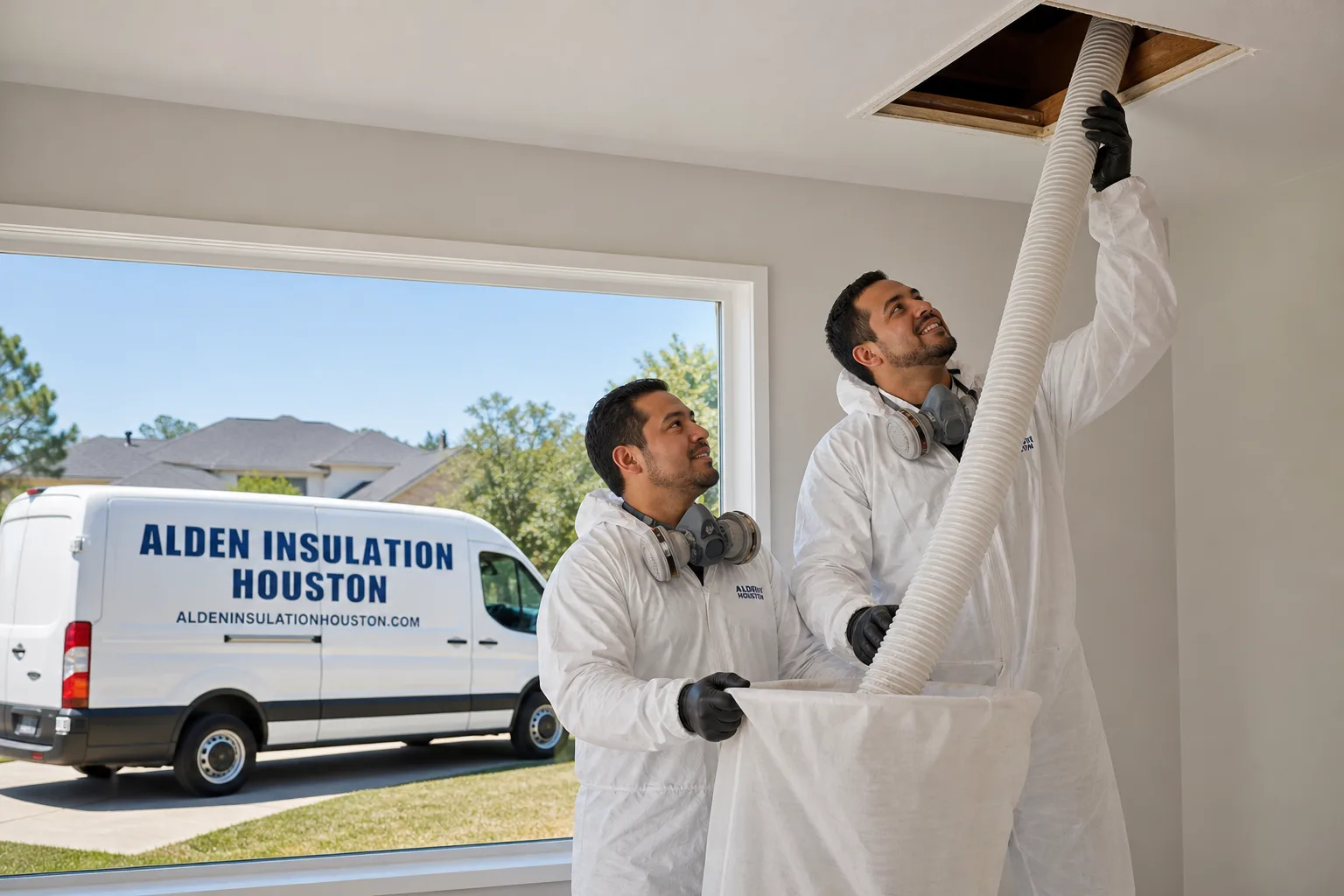
Fast, Reliable Blown In Insulation Across Houston
Blown in insulation in Houston typically costs between $1,800 and $3,400 for a whole-attic job, depending on square footage and how much removal or air sealing the house needs first. Most crews can finish a standard single-family attic in four to six hours, and the difference it makes in a Houston summer is immediate. At Alden Insulation Houston, part of the Garrison Partners family since 2002, we coordinate all dispatch from our Houston office, so the crew that shows up knows this city’s heat, humidity, and housing stock. Call (806) 581-1010 for a written estimate before any work starts.
Why Alden Insulation Houston Is Houston’s Preferred Blown In Insulation Company
Houston homeowners don’t need a contractor who treats this city like any other market. They need a crew that understands what happens inside a vented attic when outdoor humidity sits above 85 percent for weeks and the sun pushes attic temperatures past 140°F. Our background-checked, uniformed technicians work under The Garrison Standard: a written price in your hand before a single tool comes off the truck, and a written guarantee on every job for a full 365 days. If the work fails inside that year, we return at no charge. That’s the 365-Day Done Right Promise, and it’s not a sales line. It’s the rule every Alden crew follows, from Katy to Clear Lake to Spring Branch.
Homeowners in Houston call us because they’ve been burned before. A contractor shows up late, quotes one number, then revises it at the door. That doesn’t happen here. The price you approve is the number on the invoice. No exceptions. Our dispatchers answer the phone live, 24/7, which matters when you finally open the attic hatch in July and find condensation staining on the sheathing. You want answers now, not a voicemail. We understand that. We’ve answered calls from Pasadena, The Heights, and Meyerland where a homeowner just discovered blown-in fiberglass has gone flat and the upstairs rooms won’t cool below 80°F. We know exactly what to look for and what a proper fix costs before we arrive.
Bryce Holloway leads our Houston operation, and he holds every crew to the same discipline the Garrison Partners family has maintained since 2002. That means no subcontractor roulette. No unbranded materials. No vague half-day arrival windows. The technicians who walk into your home are background-checked and uniformed, and they arrive inside the window they promised. When a Houston homeowner asks us for Blown In Insulation, they’re asking for a specific outcome: cooler rooms, lower summer bills, and an attic that doesn’t breed mold. That outcome is what we’re paid to deliver, and the written guarantee backs it.
Blown In Cellulose Insulation in Houston
Blown In Cellulose Insulation is one of the most practical specs for Houston’s older wood-frame homes, especially where original fiberglass has settled or gone damp. The material is treated with borates, which resists mold and pest activity, and it fills irregular cavities in ways batts never could. In a 1982 Spring Branch house we worked on recently, the original batts had compressed to R-19 and the roof sheathing showed early mold staining. We removed the damp material, air-sealed the top plates, and blew in GreenFiber cellulose to R-38. Attic humidity stabilized before the next “Texas attic sauna” day hit.
What a Houston homeowner gets with cellulose is real thermal coverage in the places where heat sneaks through: around recessed can lights, over top plates, into soffit junctions. The material also does a better job than fiberglass at slowing air movement, which matters when your attic is 140°F and your ceiling drywall is the only boundary between that oven and your living room. Pricing for a standard Houston single-family attic runs $1,900 to $3,100, including removal of failed batts and basic air sealing at plate lines. Older tract homes in Westbury or Alief may need additional air sealing, which adds to the final number.
Air Sealing First
Cellulose does its best work when the attic air leaks are closed first. We seal top plates, wire penetrations, and can light housings before blowing insulation. Skipping this step in Houston means moist indoor air keeps pumping into the attic, where it condenses and eventually soaks whatever insulation you just paid for.
Goodbye to Settled Batts
Batts that settled to half their original thickness are not doing the job. In Houston’s 1970s and 1980s housing stock, that’s more the norm than the exception. Full removal and replacement with blown cellulose gives you a continuous thermal layer with no gaps at joists or plumbing chases.
Blown In Fiberglass Insulation in Houston
Blown In Fiberglass Insulation remains a common choice in Houston because it’s inexpensive to install and achieves solid R-values when the attic is properly sealed and ventilated. The material we install, from Johns Manville or Owens Corning, comes loose-filled and blown to whatever depth the job requires. For Houston’s cooling-dominated climate, we typically recommend R-38 to R-49 in vented attics, depending on the home’s layout and existing ductwork. A standard job runs $1,800 to $2,900 for a single-family home.
There’s a caveat Houston homeowners need to understand. Blown fiberglass loses thermal performance when it absorbs moisture, and Houston’s humidity is relentless. If the attic has poor ventilation or unsealed penetrations, that material can go damp, settle, and leave you worse off than before. We won’t blow fiberglass into a attic that hasn’t been checked for moisture sources first. That’s not upselling; that’s doing the job by the book. When the attic is right, fiberglass is a legitimate budget-friendly option that will hold its rating for years.
Where Cost Matters Most
The price difference between cellulose and fiberglass is narrower than most people think, usually a few hundred dollars across a standard attic. Fiberglass makes sense when the attic is already dry, well-ventilated, and the homeowner wants maximum R-value per dollar. We’ll quote both and explain the tradeoffs without pushing either one.
Moisture, Not Just Heat
In Houston, the bigger enemy of blown-in fiberglass is humidity, not temperature. A dry 140°F attic is manageable. A 120°F attic with condensation dripping off the roof deck is a mold factory. We check sheathing condition before recommending fiberglass in any Houston home.
Trusted Brands We Service in Houston
Alden Insulation Houston installs materials from eight industry-respected brands so you’re never stuck with whatever was cheapest on the truck. On a given Houston job, you’ll most likely see GreenFiber cellulose for moisture resistance, Rockwool where fire resistance or sound control matters, and CertainTeed or Johns Manville fiberglass for budget-conscious attics that don’t need remove-and-replace. Demilec and Icynene spray foam products appear on jobs where air sealing is critical, but that falls under Blown In Insulation in Houston only when the spec calls for hybrid approaches. Having multiple brands available means we match the material to the attic’s moisture profile, not the other way around.
Common Blown In Insulation Problems We See in Houston Homes
- Settled or compressed original batts. Homes built in the 1970s and 1980s across Sharpstown, Fondren, and Spring Branch often still have the builder-grade fiberglass they shipped with. Forty years of gravity and occasional roof leaks leave it at a fraction of its original R-value.
- Condensation-soaked blown-in fiberglass. When top plates and can lights aren’t sealed, moist indoor air rises into the attic and condenses in the cooler insulation layer. That soaked material loses loft, holds moisture against ceiling drywall, and creates the conditions for mold on roof sheathing.
- Mold on the underside of roof decking. We see this most often in the summer, when attic temperatures exceed 140°F and any trapped moisture gets cooked into the wood. Homeowners often find it during a routine inspection or when a bathroom fan gets replaced and the tech looks up.
- Uneven coverage from previous blow jobs. Some attics in Houston have been topped off by companies that blew material over old batts without air sealing or evening out low spots. The result is a patchy thermal layer that reads decent R-value on paper but performs like half that.
Pricing for Blown In Insulation in Houston, TX
Most blown in insulation jobs in Houston run between $1,800 and $3,400. A straightforward blow-over in a 1,200-square-foot attic where the existing insulation is dry and no removal is needed starts around $1,800. Full removal of settled or damp batts, air sealing at top plates and can lights, and a fresh blown-in layer to R-38 or higher lands in the $2,400 to $3,400 range. Homes with older wiring, tight attics, or multiple bathroom fans venting into the attic will cost more because the prep work takes longer. Every quote from Alden Insulation Houston is written before work begins, and that number is the number on the invoice. Call (806) 581-1010 for a free estimate that accounts for your specific attic conditions.
We Also Serve Cities Near Houston
Our Houston crews regularly work in South Houston, Pearland, Webster, and Friendswood, where the same humid climate and aging housing stock create the same attic challenges. Dispatch and scheduling come from our Houston office, but the crew arrives on time regardless of which side of Beltway 8 you’re on.
Serving Houston, TX - Our Local Coverage Area
We’re based in the Houston area and know this community well. Use the map below to see our service coverage - if you’re nearby, we can almost certainly help.
FAQs About Blown In Insulation in Houston
It fails because moisture gets into the material through unsealed top plates, can light housings, or improperly vented bathroom fans. In Houston’s humidity, that moisture condenses inside the insulation layer, collapsing its loft and drowning its R-value within a couple of years. A fresh blow job in a leaky attic will underperform almost immediately. Call (806) 581-1010 and we’ll tell you what’s actually causing yours to fail.
If the batts are damp, mold-stained, or flattened to less than half their original thickness, yes, remove them. Blowing new material over failed insulation just buries the problem. In Houston’s 1970s and 1980s homes, we remove old batts on the majority of jobs. An attic inspection will settle it.
Cellulose generally handles Houston’s humidity better because it’s denser, slows air movement more effectively, and is treated with borates that resist mold. Fiberglass loses performance once it absorbs moisture. In a well-sealed attic, both work. In a marginal attic, cellulose is the safer bet.
Rooms that won’t cool below 80°F in August, upstairs ceilings that feel warm to the touch, unexplained musty odors, or visible mold staining on roof sheathing. If your cooling bills climbed while your system’s age didn’t, the attic is usually the culprit. We’ll inspect it and show you what we find.
Insulation slows heat transfer into the living space, but it doesn’t lower attic air temperature. What it does is keep that 140°F heat from baking through your ceiling drywall. Ventilation and air sealing handle the attic temperature; insulation handles what happens at the ceiling line. A proper attic does both.
Call (806) 581-1010 for a free Houston estimate. A real person answers, 24/7, and we’ll walk you through what your attic needs and what it costs before we ever schedule a visit.
Written by Bryce Holloway, Owner at Alden Insulation Houston, serving Houston since our founding through the Garrison Partners family.