
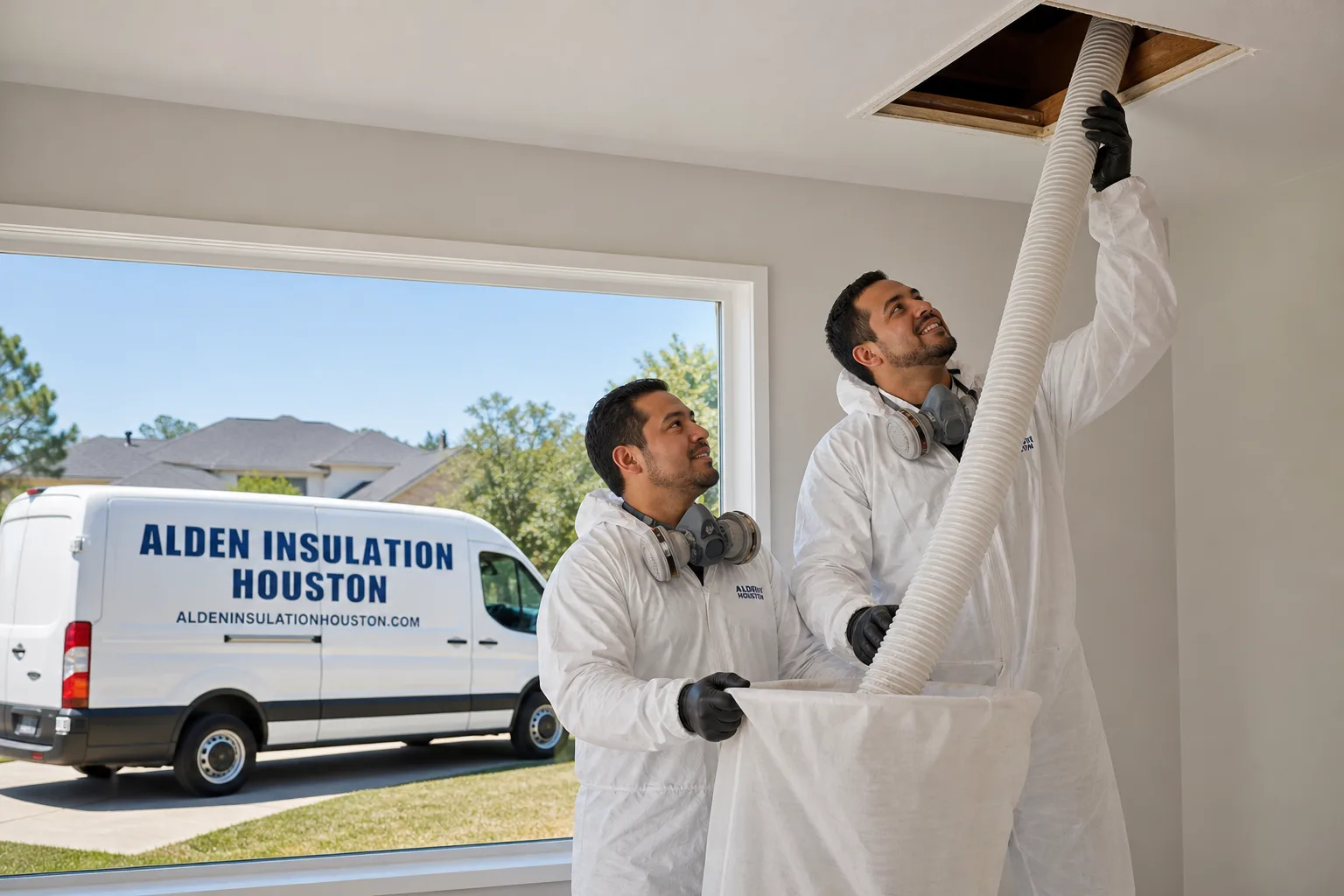
Fast, Reliable Attic Insulation Across Houston
Attic insulation in Houston typically costs $1,450 to $3,200 for a full replacement, and blown-in top-ups run $800 to $1,600 depending on square footage and current R-value. Most jobs are completed same day or next morning by a two-person crew. That’s the honest range, and it’s the number that should be in your hand before a single tool comes off the truck. Houston’s heat and humidity don’t wait, and neither do we. If your attic is underinsulated, you’re paying for it every month on the AC bill. Call Alden Insulation Houston at (806) 581-1010 and we’ll get a technician to your home inside the scheduled window, not a vague half-day range. The areas we cover most are the Heights, Sharpstown, Meyerland, Bellaire, Kingwood, and Clear Lake, all the way down through Pearland and Friendswood.
Why Alden Insulation Houston Is Houston’s Preferred Attic Insulation Company
Houston homeowners call us because we do what we say we’ll do, in writing, and we stand behind it for a full year. That’s the Garrison Standard, and it applies to every job at every location. We’re an independently owned and operated part of the Garrison Partners family, established 2002, led by Bryce Holloway. Bryce holds every crew to the Garrison Code: written prices, written guarantees, background-checked technicians in uniform, and a live person answering the phone 24/7. No voicemail, no form, no call center. When a homeowner in Meyerland calls at 7 a.m. because a raccoon tore through their soffit and the attic is now 110 degrees by 9 a.m., a real person picks up. That’s the difference. Our Houston customers talk about that: the phone call that got answered, the crew that showed up on time, the invoice that matched the quote. We don’t publish review counts we can’t verify, but we can tell you what Houston homeowners tell us: the written guarantee is the reason they said yes.
Insulation Contractors in Houston
Insulation Contractors in Houston earn their fee by knowing what happens inside an attic that hits 140°F in July and never really dries out. The job here isn’t just rolling out batts. It’s diagnosing why the insulation failed in the first place, because in Houston it almost always failed from moisture, not age alone. A proper job starts with an inspection of the roof sheathing, soffit vents, and ductwork before any material goes down. That’s the only way to avoid installing new insulation over a mold problem that’s still active.
Inspection First, Then Air Sealing
We inspect the entire attic floor before anything else. We look for settled batts, damp fiberglass, blocked soffit vents, and black speckling on the plywood. Then we air-seal the top plates, wire penetrations, and any gaps around chimneys or exhaust fans with one-part foam. In a Houston attic, air sealing matters more than adding another R-10 of fiberglass, because the humid air moving through those gaps is what causes the condensation in the first place. We do this on every job in Houston, from Kingwood to Friendswood.
Written Price Before Work Starts
You get a written price before any work begins. Not an estimate that might change, not a verbal number. A line-item quote for exactly what we’ll do and exactly what it costs. If the job grows, the price doesn’t. That’s the Garrison Standard at work. The number you approve is the number on the invoice.
Attic Ventilation in Houston
Attic Ventilation in Houston is the difference between an attic that stays dry and one that grows mold on the roof sheathing. The problem is the city’s hot, humid subtropical climate: for most of the year, the challenge is keeping heat and moisture out, not in. When an attic doesn’t breathe, temperatures spike past 140°F and the humidity condenses on the underside of the roof deck, the rafters, and the ductwork. That condensation is what turns a thermal problem into a mold problem, and it’s especially common in the city’s vast stock of 1970s and 1980s tract homes with original venting that’s been painted over, blocked by insulation, or chewed through by squirrels.
Soffit and Ridge Vent Correction
We see missing or blocked soffit and ridge vents in older brick-veneer homes all over Houston, from Sharpstown to Clear Lake. The fix is straightforward: clear the soffits, install baffles to keep blown-in insulation from covering them, and verify the ridge vents are actually open. If the ridge vent was never cut through the roof deck, no amount of soffit airflow will save you. We check that with every job.
Baffles Before Batts
Attic baffles are cheap insurance. They keep insulation from blocking the soffit vents and they direct air up along the underside of the roof sheathing to the ridge vent. We install baffles on every job where the soffit vents are present. In Houston’s vented attics, this is non-negotiable. When baffles are missing or buried, the airflow stops and the attic becomes a sauna. That’s when the mold shows up.
Trusted Brands We Service in Houston
We install and remove insulation using products from brands Houston homeowners can research on their own before saying yes: CertainTeed, Icynene, Demilec, and GreenFiber, among others. We also offer Houston Reflectix service for radiant barrier needs. We work with fiberglass batts, blown-in cellulose, and spray foam, and we’ll recommend the material that fits the house and the budget, not the one with the best margin. You can look up the spec sheets, the R-values, and the warranty terms yourself. That’s the point. We want you to know what’s going into your attic, and we stock enough material locally in Houston to handle same-week installs without waiting on a distributor.
Common Attic Insulation Problems We See in Houston Homes
- Settled original fiberglass batts in 1970s-80s vented attics. These lose R-value as they compress and settle, and they allow humid air to reach the roof sheathing, condense, and grow mold. Homes in Sharpstown and Meyerland with original Johns Manville batts are the most common call we get.
- Missing or blocked soffit and ridge vents in older brick-veneer homes. When the vents are painted over, buried under blown-in insulation, or never properly cut, heat and humidity get trapped. That causes condensation on the roof decking and ductwork, which causes mold and drives up AC costs.
- Damp or compressed fiberglass from AC condensate leaks. Hot attics make AC units work harder, and when the condensate line clogs or the pan overflows, the insulation gets soaked. Wet fiberglass loses nearly all its R-value and becomes a mold host. We see this constantly in Houston’s summer months.
- No air sealing anywhere in the attic floor. Gaps around top plates, wire penetrations, and can lights pull conditioned air out of the living space and pull humid attic air in. In Houston, sealing those gaps matters more than adding insulation. A home can have R-30 in the attic and still sweat like a glass of iced tea on a patio table if the air sealing was never done.
Pricing for Attic Insulation in Houston, TX
Most attic insulation projects in Houston run $1,450 to $3,200 for a full Insulation Removal - Houston and replacement, depending on square footage, access, and the material chosen. A blown-in top-up over existing insulation runs $800 to $1,600 for a typical 1,800-square-foot home. Air sealing runs $400 to $900 as a separate line item, though we’ll always recommend it because it pays for itself in Houston’s climate. Attic baffle installation runs $6 to $12 per baffle installed. Every job includes a written price before work starts, and every job is covered by the 365-Day Done Right Promise: if the work fails within a year, we come back at no charge. Call (806) 581-1010 for a free estimate. The number we quote is the number you pay.
We Also Serve Cities Near Houston
Our crews serve the entire Houston metro, and we regularly work in South Houston, Pearland, Webster, and Friendswood. If you’re in any of those areas, the same Attic Insulation team that serves Attic Insulation in Houston will show up with the same written price and the same 365-Day Done Right Promise. Scheduling is coordinated from our Houston office, so a live person answers the phone 24/7 and dispatches a background-checked, uniformed technician inside the window we promised.
Serving Houston, TX - Our Local Coverage Area
We’re based in the Houston area and know this community well. Use the map below to see our service coverage - if you’re nearby, we can almost certainly help.
FAQs About Attic Insulation in Houston
Look for black speckling on the underside of the roof sheathing, damp or compressed fiberglass batts, and visible gaps between the insulation and the top plates. You can also check your energy bills: if the AC runs constantly in summer and the upstairs never cools below 78, the insulation is doing nothing. In Houston’s humidity, failed insulation is almost always a moisture problem first and a thermal problem second. If you see any of those signs, call (806) 581-1010 and we’ll inspect it. The estimate is free.
Because the air moving through gaps in the attic floor carries moisture, and moisture is what destroys insulation and grows mold in Houston’s humid climate. R-value measures resistance to heat transfer, but it does nothing to stop humid air from entering the attic. In a 140°F Houston attic, that humid air condenses on the roof sheathing and the damage starts. Sealing the gaps first means the insulation you install stays dry and actually works. We include air sealing recommendations on every inspection.
No. If the old insulation has settled, been damp, or shows any sign of mold, installing over it traps the problem beneath a fresh layer that will also fail. We remove the old material, treat any surface mold, air-seal, and then install new batts or blown-in at the correct R-value for Houston’s climate zone. That’s the only way the new insulation performs. A top-up only makes sense when the existing insulation is dry, clean, and uncompressed. If you’re not sure, call us and we’ll tell you honestly.
Short answer: you don’t work in it at peak heat without preparation. Our crews start early, sometimes before 7 a.m. in July and August, and they use infrared thermometers to monitor attic temps throughout the day. They hydrate constantly, rotate out of the attic every 20 to 30 minutes, and stop work if the heat becomes dangerous. Last July, our crew pulled down the attic stair in a 1979 brick-veneer home in Sharpstown where the homeowners had found black speckling on the plywood roof sheathing during a ‘Texas attic sauna’ afternoon. We removed the settled original Johns Manville fiberglass batts, treated the sheathing for surface mold, air-sealed the top plates with one-part foam, and installed new Owens Corning R-38 batts with baffles from the soffits to the ridge vents, checking the attic temp with an infrared gun the whole time to avoid heat exhaustion. That’s how Attic Insulation is done in Houston without putting anyone in danger.
Check for rust on the nails coming through the roof deck, condensation on the ductwork, or black mold on the sheathing. Those are all signs the attic isn’t venting. You can also feel the attic temperature: if it’s far hotter than the outside air on a summer afternoon, the venting is failing. Missing or blocked soffit vents are the most common culprit in Houston’s older brick-veneer homes. We inspect venting on every job and we’ll tell you if it needs correction before we add insulation. Call (806) 581-1010 and we’ll take a look.
Written by Bryce Holloway, Owner at Alden Insulation Houston, serving Houston since joining the Garrison Partners family in 2002.